
Bail 101: Everything You Need to Understand Bail in Texas
If bail is brand-new to you and someone you love is in jail right now, start here. This is the plain-English overview, the key terms, how the process actually flows, and where to go deeper on each piece. No jargon, no judgment.

Bail is money the court holds to make sure a defendant returns for their court dates. Most families can't pay the full amount, so they use a bail bond: you pay a licensed bondsman a 10% fee and we post a bond covering the whole bail. Your loved one goes home, and everyone's obligation ends when the case closes and all court dates are met. In Denton County, we can start that in minutes, 940-381-0338.

You don't need to learn the whole system
You need to understand three things: what bail costs, who has to sign, and what happens next. Everything else can wait until morning.
The basics, in three questions
Almost everything about bail comes down to answering these three things. Get comfortable with them and the rest falls into place.
1. What is bail, and why is it set?
When someone is arrested, a judge or magistrate sets a bail amount, a financial guarantee that the person will show up for their hearings. Pay it (directly or through a bond) and they're released while the case proceeds. Skip court, and that money is at risk. Bail isn't a fine or a punishment; it's the court's way of letting someone go home in the meantime.
2. What is a bail bond?
Since bail is often thousands of dollars, most people can't pay it in cash. A bail bond is the alternative: a licensed bondsman posts the full amount with the court on your behalf, and you pay a fraction as a fee. In Texas that fee is customarily 10% of the bail, and it's non-refundable. It's the price of the service, not a deposit.
3. What does the cosigner promise?
A cosigner (or indemnitor) signs the bond agreement, taking responsibility that the defendant appears at every court date. If they do, the obligation ends when the case closes. If they don't, the cosigner can be liable for the full bail. Which is why you cosign only for someone you trust.
The process, start to finish
From the arrest to the moment your loved one walks out, the path almost always looks like this.
Arrest & booking
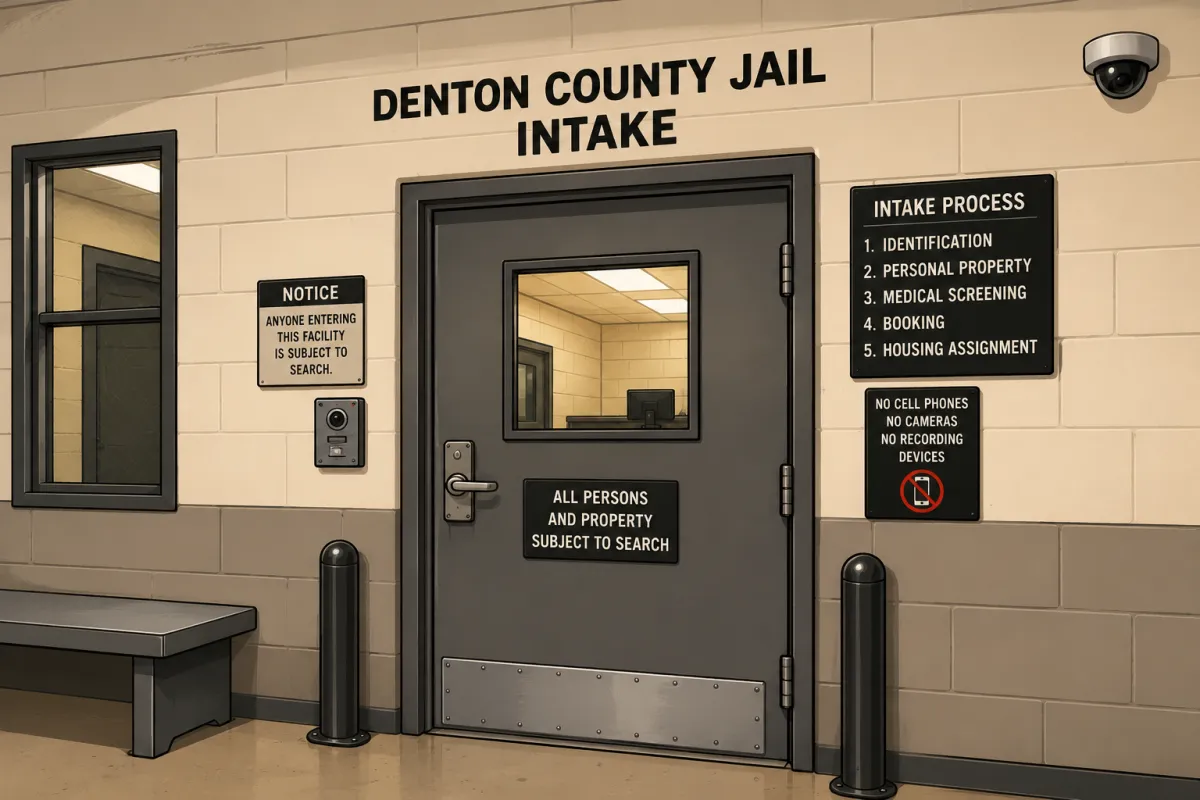
Your person is booked into the Denton County Jail. Fingerprints, photo, and a booking number. Bail is usually set within a few hours.
Call a bondsman
Give us the defendant's name, date of birth, jail, and booking number if you have it. Missing details? We look people up every day and can find the rest.
Sign & pay the 10% fee
A cosigner signs the agreement and pays the premium. Collateral is only needed in some cases, and it's returned when the case closes.
We post the bond
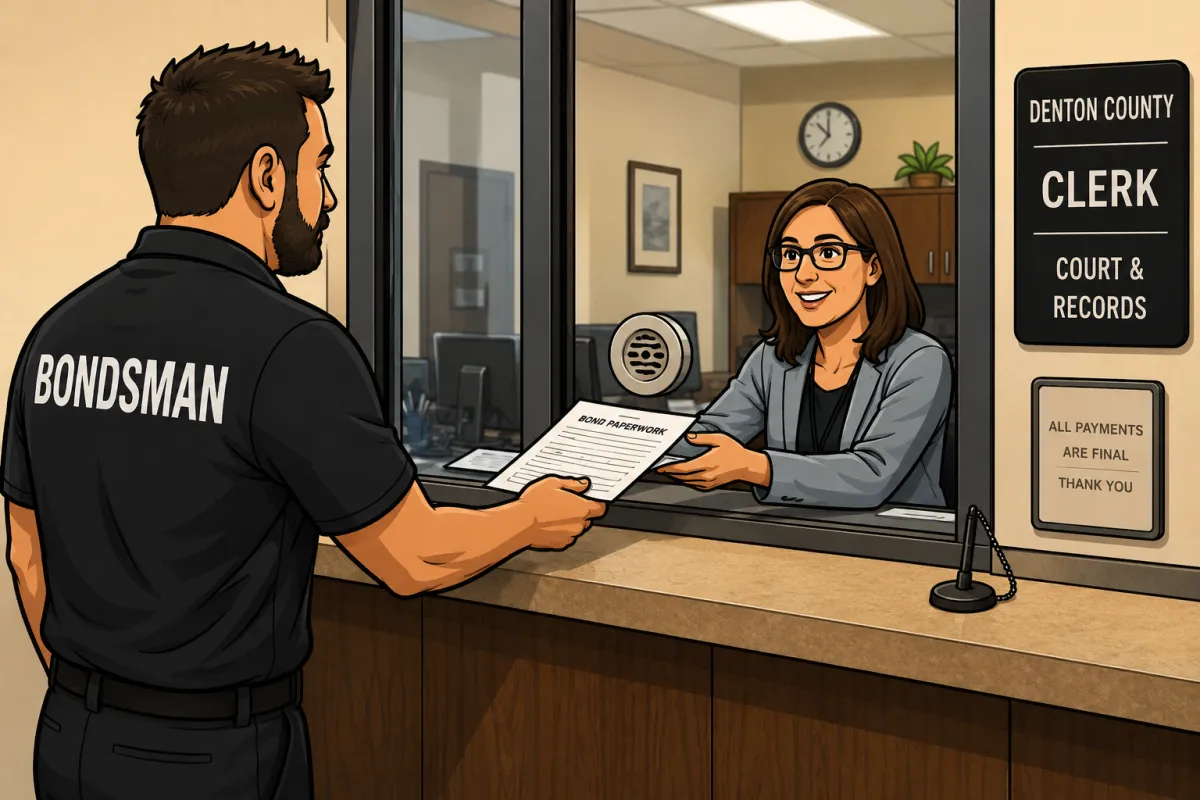
We file the surety bond with the court and jail. Our office sits right across from the Denton County Jail, so there's no cross-town delay on our end.
Release
The jail processes the paperwork and your loved one goes home. How long that takes is up to the jail's workload. We handle our side immediately and keep you posted.
Key terms, decoded
The words you'll hear from the court, the jail, and the bondsman, in language that actually means something.
The amount the court sets as a guarantee the defendant will return for hearings.
A bondsman's guarantee to the court for the full bail, in exchange for a 10% fee.
The non-refundable fee you pay the bondsman, 10% of the bail in Texas.
A bond posted by a bondsman on your behalf, the most common type.
Paying the full bail to the court yourself; refundable when the case ends.
The person who signs for the bond and guarantees the defendant appears.
Property backing a bond in higher-risk cases; returned after the case closes.
The jail intake process. Fingerprints, photo, and a booking number.
When a defendant misses court and the court moves to keep the bail.
An arrest order a judge issues, most often after a missed court date.
Go deeper
Ready for the specifics? Each guide takes one piece of the puzzle and walks through it in full.